
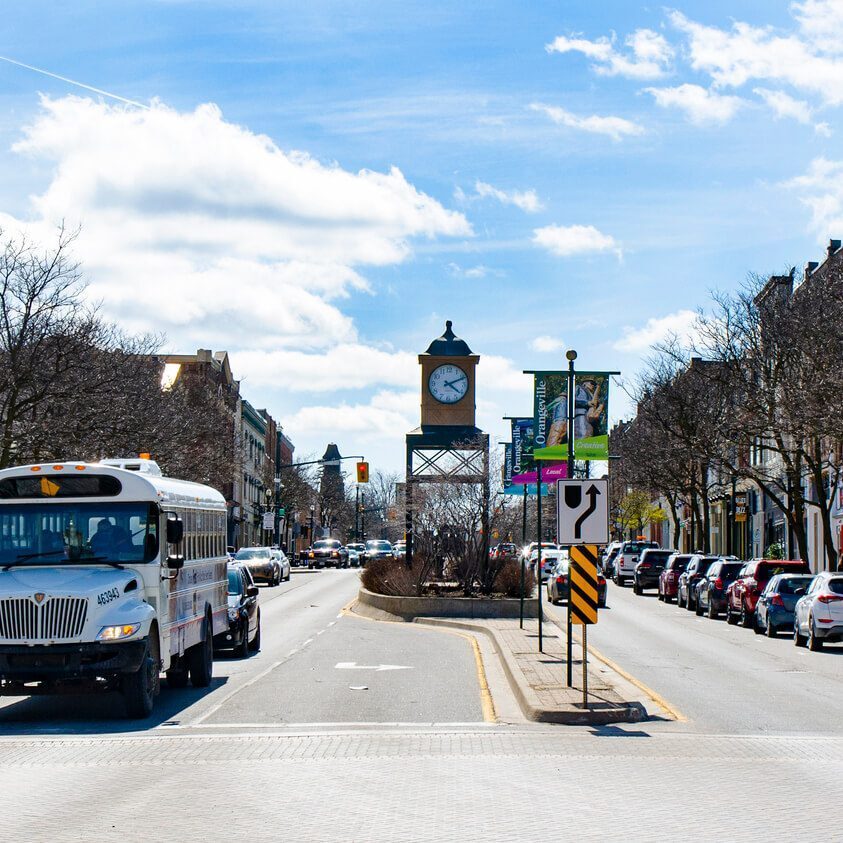
First-Time Home Buyer Guide for Orangeville
Buying your first home in Orangeville does not have to feel overwhelming. Here is what we tell first-time buyers about down payments, incentives, closing costs, and the local market.
Buying your first home in Orangeville is exciting, and a little intimidating. The rules around down payments, mortgage insurance, and closing costs change often enough that even well-meaning advice from a few years ago can be off. This guide reflects what we are seeing in the market right now, and what we walk our first-time buyers through before they start booking showings.
Is Orangeville realistic for a first-time buyer?
Yes, but you need a clear budget. As of October 2026, the average sold price in Orangeville is sitting around $755,000 according to Zolo, while the Toronto Regional Real Estate Board benchmark is closer to $715,700. The benchmark is usually the better number to budget around because it smooths out the mix of detached homes, townhouses, and condos.
Entry-level options include townhomes and condominiums, which often start in the mid-$500,000s, while detached homes typically run from the high-$700,000s upward. That means a first-time buyer can get into the market here, especially with the right down-payment plan and a little flexibility on property type.
How much down payment do you need?
In Canada, the minimum down payment depends on the purchase price:
- 5% on the first $500,000
- 10% on the amount between $500,000 and $999,999
- 20% on any amount over $1,000,000
On a $755,000 home, that works out to about $50,500. If you put down less than 20%, your lender will require mortgage default insurance, often called CMHC insurance. That premium gets added to your mortgage, so you do not need to pay it all at closing, but it does increase your monthly payment.
First-time buyer incentives that actually help
There are a few programs that can make your first purchase easier:
- First-Time Home Buyer Incentive: This shared-equity program can lower your monthly mortgage, but it comes with eligibility rules and repayment terms, so make sure you understand the details before counting on it.
- Home Buyers' Plan: You can withdraw up to $60,000 from your RRSP to buy or build a qualifying home, with 15 years to repay it.
- First Home Savings Account: Contributions are tax-deductible, withdrawals for a first home are tax-free, and you can carry unused contribution room forward.
- Ontario land transfer tax rebate: First-time buyers can get up to $4,000 back, which covers most or all of the provincial tax on homes under about $370,000. On a $755,000 purchase the rebate still helps, but you will still owe some land transfer tax. You can estimate the total with our land transfer tax calculator.
Talk to a mortgage broker or your bank to confirm which programs you qualify for. Rules and limits change, and what worked for a friend may not work for you.
Get pre-approved before you shop
This is the step too many buyers skip. A pre-approval tells you what a lender is willing to lend, but more importantly it forces you to look at your real monthly payment, including property taxes, insurance, and condo fees if they apply. In Orangeville, municipal property taxes are roughly 1.1% to 1.3% of assessed value, so budget about $600 to $850 per month on a typical home.
Pre-approval also makes your offer stronger. Sellers and listing agents take you more seriously when you can show you have already done the financial homework. If you are ready, you can request a pre-approval through our team.
What happens once you find the right home
When you find a place you love, we draft an Agreement of Purchase and Sale. In Ontario, offers usually include conditions for financing, home inspection, and sometimes status certificate review for condos. These conditions protect you, but in a competitive situation you may need to keep them short or, in some cases, go in without them. We help you weigh that risk based on the property and the current market.
After the offer is accepted, your lawyer handles the closing: title search, registering the mortgage, transferring funds, and delivering the keys. Plan for closing costs beyond the down payment, including legal fees, title insurance, moving expenses, and adjustments for property taxes or utilities.
Local tips for buying in Orangeville
- Look at the whole neighbourhood, not just the house. School catchments, commute routes, and winter road maintenance all affect day-to-day life.
- Consider property type carefully. A country property or acreage can mean well water, septic, and conservation authority rules, which add complexity a first-time buyer may not want.
- Ask about the age of big-ticket items. Roof, furnace, windows, and the electrical panel can change your first-year budget quickly.
Every first-time buyer has a different starting point. Some have a 20% down payment saved and want to move fast. Others need a year-long savings plan and a clear target. Wherever you are, we can help you map the next step.
The numbers here are a starting point. Talk to a licensed mortgage professional and your real estate lawyer to confirm what applies to your situation.